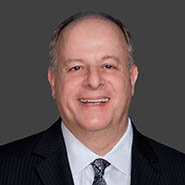


Robert Rosenberg Authored an Article Titled, "When Mark Cuban Lets You Deepfake Him…And the Rest of Hollywood Prepares for Battle."
Imagine you’re scrolling through TikTok, and suddenly you see Mark Cuban -- yes, the billionaire from Shark Tank -- singing a goofy jingle about discount prescription drugs. Except... it’s not actually him. It’s an AI-generated video that looks like him, sounds like him, and promotes his company, but he never filmed it.
That’s not some weird internet prank. That’s his plan.
In a move that’s equal parts savvy and surreal, Cuban has given fans explicit permission to use AI to recreate his likeness… as long as they plug his startup, Cost Plus Drugs, in the video. It’s like Cameo meets deepfake tech, except instead of paying for a birthday shoutout, you’re producing free advertising for his pharmacy brand with AI.
And unlike most celebrities who’ve been quick to crack down on anything that even looks like a fake version of them, Cuban’s approach is basically: “Go for it, as long as you tag the brand.”
Why He’s Doing It (And Why It’s Pretty Clever)
At first glance, this might look like Cuban just trying to go viral for fun. But there’s a real strategy here.
By giving people the green light to make AI versions of him, Cuban is flipping the script. Instead of spending time and money suing people who use his image without permission, he’s encouraging it, as long as it works in his favor. Think of it as a DIY ad campaign, powered by fans and creators, where Cuban gets all the reach and none of the production costs.
It’s also a smart way to test the waters of the AI future. Celebrities and public figures are quickly becoming aware that deepfakes and AI remixes are going to happen whether they like it or not. Cuban’s just choosing to embrace the trend early, and on his own terms.
But Here’s the Catch: The Internet Never Forgets
As fun as it sounds to give the world a blank check to remix your face, voice, and personality, there’s a reason most celebrities haven’t jumped on this bandwagon. Once a fake version of you is out there, it can be hard, if not impossible, to contain.
Sure, OpenAI might have some rules in place to limit what people can do inside its platforms.
But those protections only go so far. Once a video gets saved, shared, and posted to Instagram, YouTube or TikTok, it’s out there and you no longer have control over how people use it, remix it, or misunderstand it.
It’s like letting someone you don’t know borrow your head for a day and hoping they act responsibly. Sounds like a risky bet.
Meanwhile, Others Are Taking a Very Different Approach
While Cuban is saying “have fun,” many other public figures are quietly building moats around their identities. They’re not looking to go viral, they’re looking to avoid getting burned.
One example? A fast-growing startup called Loti AI, which helps actors, musicians, athletes, and influencers keep tabs on how their likenesses are being used online. Think of it as digital security for your face. It monitors for unauthorized deepfakes, flags suspicious content, and can help file takedown requests if something crosses the line.
This isn’t about hiding from the internet, it’s about managing your reputation in an age where someone can make a believable version of you saying or doing just about anything, with just a few typed prompts.
As Brandon Bauman, Loti AI’s Chief Strategy Officer, puts it:
“The reality is simple: despite what platforms promise, people and brands cannot trust them to respect, police, or enforce their own guardrails. These safeguards are easily bypassed at the prompt stage, and once harmful content is generated, it lives forever in the hands of the user and is free to spread across the internet. No matter what tools Sora and other platforms roll out, they will be limited to policing what happens inside their platforms, but they have zero control once that content hits TikTok, Instagram, or YouTube, and that’s where the real harm occurs.”
In other words: by the time you realize something’s gone wrong, it may already be too late.
Who’s Right — The Risk-Taker or the Guarded Celeb?
It’s easy to admire Cuban’s boldness. He’s treating his public image like open-source software: remix it however you want, just leave in the credit line. But it’s also easy to see why others are hitting pause.
Not everyone wants their face showing up in an AI-generated dating app ad in Slovenia or making an unsolicited cameo in a conspiracy theory video. And even if the original content starts as a joke, it can quickly take on a life of its own once it hits the ether.
This isn’t a hypothetical anymore. This is the messy, real-world side of AI and fame.
Final Thought: There’s No One-Size-Fits-All Playbook
Mark Cuban might be a trailblazer. Or he might just be the first high-profile experiment. Either way, he’s forcing a bigger conversation: in the age of AI, how do we manage ownership, identity, and trust when anyone can recreate anyone else with just a few clicks?
Some are choosing to embrace it. Others are choosing to defend against it.
Either way, the deepfake era is here. Invite it or fight it, the choice is yours.
Explore each state’s right of publicity laws—including protections against digital replicas and deepfakes—with the Moses Singer Right of Publicity Interactive Heatmap.